Pages


Showing posts with label Federal Reserve. Show all posts

Saturday, April 20, 2013

The Gold Standard, Oil Prices, and Real Wages


A couple of interesting observations I make in regards to the gold standard are the effects that ending convertibility had on the oil markets and real wages. President Richard M. Nixon officially closed the gold window in August 1971 and we have the data to analyze the results of that decision.

Here is a graph of oil prices ranging from the beginning of the post-war era to the present:
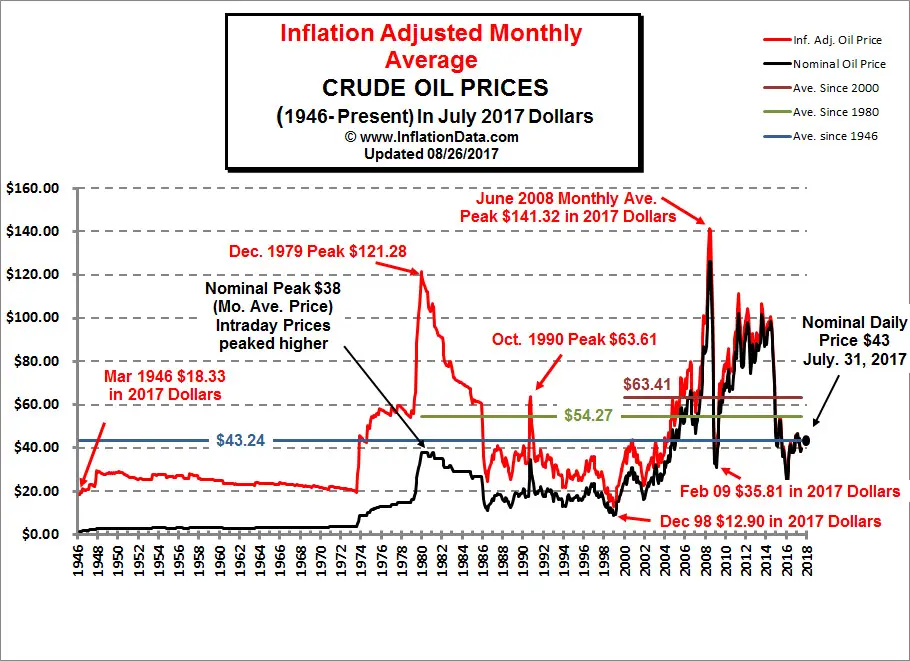


We can see that from 1946-on inflation adjusted oil prices actually were slightly deflationary. Around 1974 the price of gold took off, which makes sense when considering the fact that inflation takes several months to fully circulate throughout the economy and that the Bretton-Woods agreement originally had high hopes.

While Middle Eastern conflicts heavily effect oil prices, that (partially, Fed policy is also influential) accounts more for volatily than cumulative increases in prices. Switching to the fiat petro-dollar as the reserve currency for oil only invited price increases and unpredictability in the oil market. 

Here is a graph of real wages and projected wages if tied to worker productivity, also post-war to the modern era:

From 1947-1972, wages were coupled with productivity. Nearly immediately afterwards, wages completely decoupled from productivity and have been downward or flat ever since. Hence, we have what is termed the "growing wealth gap" between the rich and the poor.

The conclusion we can draw from this is that inflation has eroded the purchasing power of the middle class, while the rich who receive the newly created money first are able to accumulate more wealth. Also, with a constantly unstable currency, it likely distorts the labor market in terms of determining what the real value of work is.

Americans are rightly upset about unaffordable oil prices and sticky wages. They should look to the gold 
standard as the solution. I don't believe these graphs are simply a coincidence. 

Friday, April 19, 2013

Jim Rickards: At No Time Were Savers Rewarded For Prudence


Jim Rickards is probably one of the most knowledgeable and layman-friendly investors popular in media circles today.

His statement indicated in the title is from his 2012 Senate testimony to the Subcommittee on Economic Policy:

The principal victims of the Fed’s policies are those at or near retirement who face a Hobson’s Choice of gambling in the stock market or getting nothing at all. A summary of these deleterious effects on retirement income security, explained in more detail below, includes the following:

  • Increasing income inequality. Zero rate policy represents a wealth transfer from prudent retirees and savers to banks and leveraged investors. It penalizes everyday Americans and rewards bankers, hedge funds and high-net worth investors.
  • Lost purchasing power. Zero rate policy deprives retirees and those nearing retirement of income and depletes their net worth through inflation. This lost purchasing power exceeds $400 billion per year and cumulatively exceeds $1 trillion since 2007.
  • Sending the wrong signal. Zero rate policy is designed to inject inflation into the U.S. economy. However, it signals the opposite – Fed fear of deflation. Americans understand this signal and hoard savings even at painfully low rates.
  • A hidden tax. The Fed’s zero rate policy is designed to keep nominal interest rates below inflation, a condition called “negative real rates”. This is intended to cause lending and spending as the real cost of borrowing is negative. For savers the opposite is true. When real returns are negative the value of savings erodes – a non-legislated tax on savers.
  • Creating new bubbles. The Fed’s policy says to savers, in effect, “if you want a positive return invest in stocks.” This gun to the head of savers ignores the relative riskiness of stocks versus bank accounts. Stocks are volatile, subject to crashes, and not right for many retirees. To the extent many are forced to invest in stocks, a new stock bubble is being created which will eventually burst leaving many retirees not just short on income but possibly destitute.
  • Eroding trust and credibility. Economics has been infused in recent decades with the findings of behavioralists and social scientists. While this social science research is valid, the uses to which it is put are often manipulative and intended to affect behavior in ways deemed suitable by Fed policy makers. This approach ignores feedback loops. As retirees realize the extent of market manipulation by the Fed they lose trust in government more generally.

The effects on retirees and retirement income security are both the intended and unintended results of the Fed’s efforts to revive the economy through a replay of the debt-fueled borrowing and consumption binges of the past fifteen years. Beginning with Fed rate cuts in 1998, which fueled the tech stock boom-and-bust, through the rate cuts of 2001, which fueled the housing bubble, until today the Fed has resorted to repetitive bouts of cheap money for extended periods. This monetary ease has found its way into inflated asset values that in turn provided collateral for debt-driven consumption. These binges drove the economy until the inevitable asset bubble collapses caused a contraction in consumption and launched another cycle. At no time were savers rewarded for prudence.
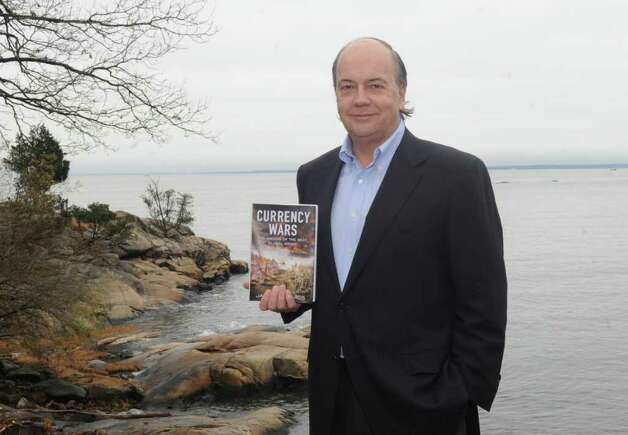
On a related note, here is an excellent interview of Rickard's discussing his bestselling book Currency Wars, the U.S. economy, and international markets:


Tuesday, April 16, 2013

Texas is shooting to reclaim it's gold


According to the Star-Telegram: 

Texas Rep. Giovanni Capriglione has introduced a bill that would establish a gold depository run by the state, and he has Gov. Rick Perry's support.

In the article, Capriglione, Perry, and former Congressman Ron Paul all showed strong support for the idea of Texas reclaiming its gold from the federal government:
"Something on the scorecards of a lot of these businesses in deciding whether they want to come to Texas is stability and gold as being one of those items," Capriglione said. "I think it's been in his consciousness for a while in trying to get some sort of depository in the state of Texas."
 "If we own it," Perry said, "I will suggest to you that that's not someone else's determination whether we can take possession of it back or not."

Read more here: http://www.star-telegram.com/2013/03/21/4721036/tarrant-lawmaker-seeks-to-create.html#storylink=cpy
 "If you think gold is a hedge, or a protection, you always want it as close to the individual and the entity as possible," Paul told The Texas Tribune on Thursday. "Texas is better served if it knows exactly where the gold is rather than depending on the security of the Federal Reserve."

Read more here: http://www.star-telegram.com/2013/03/21/4721036/tarrant-lawmaker-seeks-to-create.html#storylink=cpy
 All of this makes sense, considering the Federal Reserve's inner secrets still escape government audits to this day. Paul's "Audit the Fed" bill passed the House during the last session, but Majority Leader Reid refused to bring it up for a vote in the Senate despite his strong support for an audit earlier in his career.

With all of the complex currency swaps that are constantly being made, it would not be surprising to find out that most or all of the gold held in Fort Knox and the New York Federal Reserve Bank is either gone or owned by a foreign government.

Should it still be there, it is in the interest of Texas to hold on to its gold as protection against a currency crisis which is almost guaranteed with the nation's debt levels and willingness to pay for it with the hidden tax, inflation.

It is likely Perry is taking cues from Paul, but also Wall Street veteran Jim Rickards, whom he cited during a Presidential debate as heavily informing him on currency issues.

Here is a recent interview of Rickards discussing and voicing support for the depository plan:


Vintage Ron Paul supporting the gold standard during his Congressional run in 1976.


Read more here: http://www.star-telegram.com/2013/03/21/4721036/tarrant-lawmaker-seeks-to-create.html#storylink=cpy